Monk fruit is a small, round gourd native to southern China, and its extract has become one of the most popular zero-calorie natural sweeteners on the market. The sweet compounds inside — called mogrosides (pronounced moh-GROH-sides) — can be 150 to 250 times sweeter than table sugar, which means you only need a tiny amount. Liquid drop formats are especially appealing because they dissolve instantly, measure precisely, and travel easily. But here’s the thing most buyers don’t realize until they’ve gone through a few bottles: “monk fruit liquid drops” is not a standardized product category. Some bottles contain highly concentrated mogroside extract. Others are mostly water, glycerin, or alcohol with a small percentage of actual monk fruit. The price difference between these two types can be dramatic — and if you’re buying the diluted version at concentrated-formula prices, you’re leaving real money on the table. This guide breaks down exactly how to tell them apart, what the cost-per-serving math actually looks like, and which format makes sense for your use case.
The Label Language That Actually Tells You What’s Inside
The most important number on any monk fruit liquid drops label is the mogroside V percentage — specifically mogroside V (MV), which is the primary sweet-active compound in monk fruit extract. According to Examine.com’s Monk Fruit (Luo Han Guo) Supplement and Research Overview, mogrosides are the isolated glycosides responsible for the extract’s intense sweetness, and the V-type (mogroside V) is the most potent and well-studied fraction. Most consumer-grade liquid drops don’t list this percentage explicitly, which is itself useful information: when a brand doesn’t tell you the MV concentration, you should assume it’s low.
Here’s what the label hierarchy looks like in practice:
High-concentration extract formulas will typically list monk fruit extract as the first or second ingredient, sometimes specifying “20% mogroside V” or “50% mogroside V.” These are the potency grades used in professional food applications, though the 20% grade is increasingly appearing in premium retail formats. A single drop of a high-MV product can sweeten a full serving because the active compound is densely present.
Diluted formulas — which represent the majority of the $8–$20 grocery-tier market — typically list water, vegetable glycerin, or alcohol (usually food-grade ethanol) as the first ingredient, with monk fruit extract appearing third or fourth. Glycerin (a thick, mildly sweet liquid derived from plant oils) serves as both a preservative and a sweetness carrier, which is why these products still taste sweet even with minimal monk fruit. The glycerin is doing some of the work you’re attributing to the monk fruit.
A key phrase to watch: “natural flavor” listed alongside monk fruit in a formula is often a signal that the monk fruit concentration alone is insufficient to carry the sweetness profile. The natural flavor may be contributing sweetness perception or masking bitterness at low MV concentrations.
Healthline’s article “What Is Monk Fruit Sweetener? Everything You Need to Know” notes that the FDA has granted monk fruit extract GRAS (Generally Recognized As Safe) status, but that designation covers the extract broadly — not specific concentration levels. The American Diabetes Association’s published position on sweeteners, available at Diabetes.org, similarly endorses monk fruit as a non-nutritive sweetener appropriate for blood glucose management, but does not distinguish between diluted and concentrated retail formulas. The clinical backing is real; the quality enforcement at the product level is largely on you as the buyer.
The Cost-Per-Serving Math: Where Diluted Formulas Lose
This is where the comparison gets concrete. Let’s look at how the two formula types perform on a cost-per-serving basis, using typical 2025–2026 retail pricing.
By the numbers:
| Format | Typical Retail Price | Servings per Bottle | Serving Size | Cost per Serving |
|---|---|---|---|---|
| Diluted glycerin-based drops (standard grocery) | $10–$14 / 2 fl oz | ~60 | 10–15 drops | $0.17–$0.23 |
| Concentrated extract drops (20%+ MV, premium) | $22–$35 / 2 fl oz | ~120–180 | 3–5 drops | $0.12–$0.19 |
| Bulk concentrated liquid (food-service / prosumer) | $45–$80 / 8 fl oz | 600–900 | 3–5 drops | $0.05–$0.13 |
The paradox: the more expensive bottle often has a lower cost per serving because you’re using dramatically fewer drops. A diluted formula that requires 15 drops to sweeten 8 oz of liquid will run out three to five times faster than a concentrated formula requiring 4 drops for the same effect. At the grocery-shelf price point, you’re frequently paying for water and glycerin delivery infrastructure, not for more monk fruit.
MindBodyGreen’s analysis of monk fruit extract potency grades identifies this as the “dilution trap” — premium-sounding packaging at grocery prices that conceals a low-mogroside formula. Understanding that trap is the first step to spending money more precisely.
Three Product Tiers, Three Different Buyers
Understanding the landscape means knowing which tier solves your problem. The sections below walk through each tier with a clear recommendation marker so you can navigate directly to the option that fits your situation.
Tier 1: Grocery-Shelf Diluted Drops
Price range: $8–$18
Brands like Lakanto Liquid Monk Fruit Sweetener and NOW Foods Monk Fruit Liquid fall into this tier. These are legitimate products — they work, they’re convenient, and the glycerin base means they blend easily into cold liquids without the separation issues you sometimes get from pure extract in water. The mogroside concentration is modest, but so is the use-case intensity. If you’re sweetening one or two servings a day at home and you’re not tracking cost-per-drop, this format is perfectly functional.
The trade-off, based on aggregated buyer feedback across natural-food retail platforms: the glycerin base can add a faint residual sweetness or thickness that some users notice in delicate applications like sparkling water or light vinaigrettes. For robust applications — smoothies, protein shakes, sauces — most users report no issue.
Best fit: Casual daily users, newcomers to liquid monk fruit, anyone who values easy availability over optimized cost-per-serving.
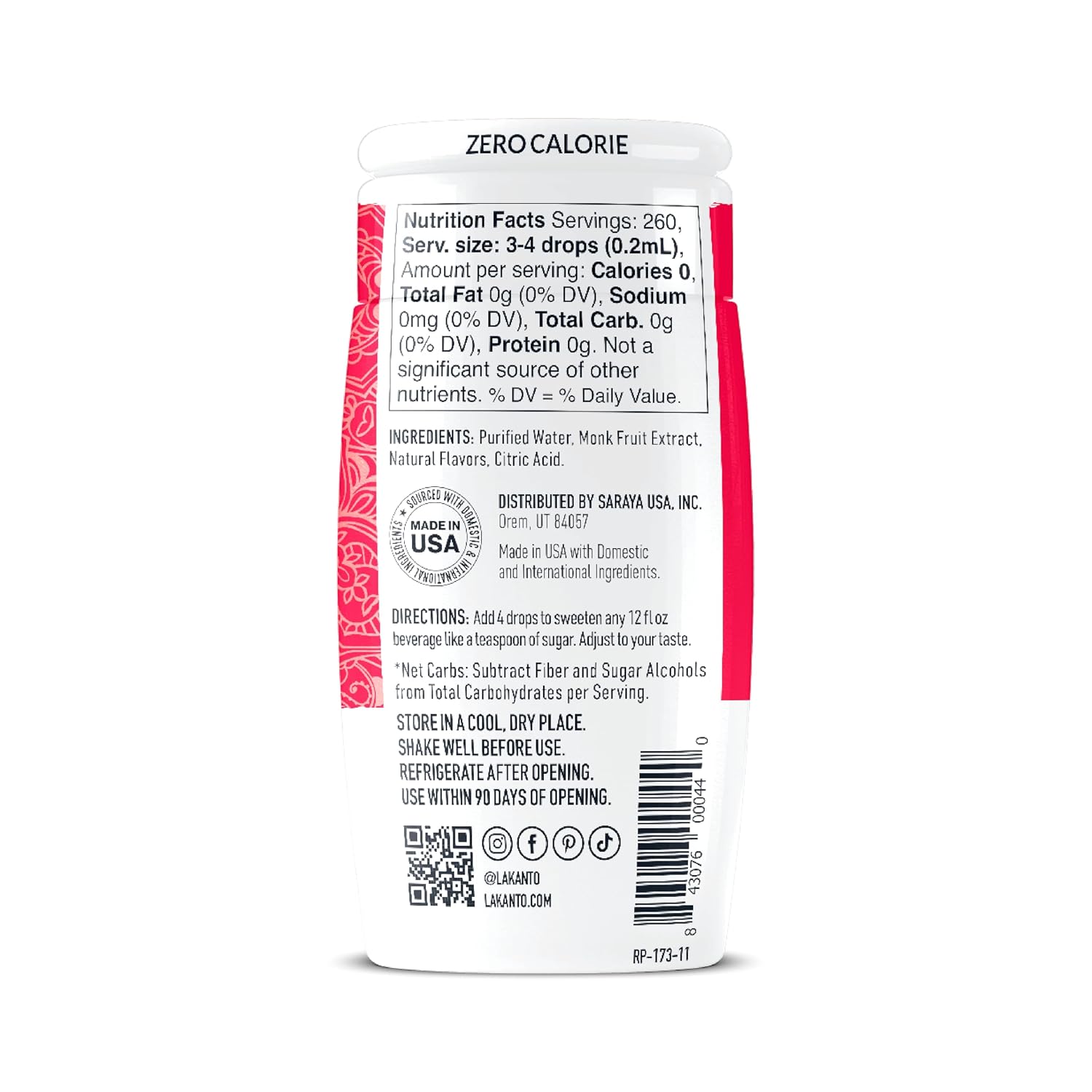
Lakanto
$10.42
In stock on Amazon
Check price on AmazonTier 2: Premium Concentrated Retail Drops
Price range: $20–$40
This tier is where label transparency starts to improve. Products from specialty wellness brands carried in natural-food stores begin specifying extract ratios more clearly. Some brands in this range are targeting the diabetic and keto communities specifically — and as the American Diabetes Association’s sweetener position statement at Diabetes.org supports, zero-glycemic sweeteners at effective concentrations are meaningful for blood sugar management, not just caloric reduction.
Buyers in this segment consistently report that the learning curve is real: you will over-sweeten your first few applications before you calibrate. A 4-drop serving that replaces 1 teaspoon of sugar is counterintuitive when you’re used to the grocery-tier formula. The reward is that a bottle lasts substantially longer, and the mogroside V profile tends to produce a cleaner sweetness with less of the trailing sweetness that glycerin-based formulas can leave.
One formulation nuance documented in Nutrition Journal (BioMed Central) in their review “Rare Sugar Sweeteners: Functional Properties and Consumer Applications”: higher MV concentrations can produce mild bitter or fruity off-notes at elevated doses in neutral pH applications. This is a real trade-off — concentrated doesn’t always mean “more pleasant at high volume,” it means “effective at low volume.”
Best fit: Keto and low-glycemic users who go through drops regularly, anyone already calibrated on a diluted formula and ready to optimize, and buyers who want label transparency as a proxy for overall brand quality.
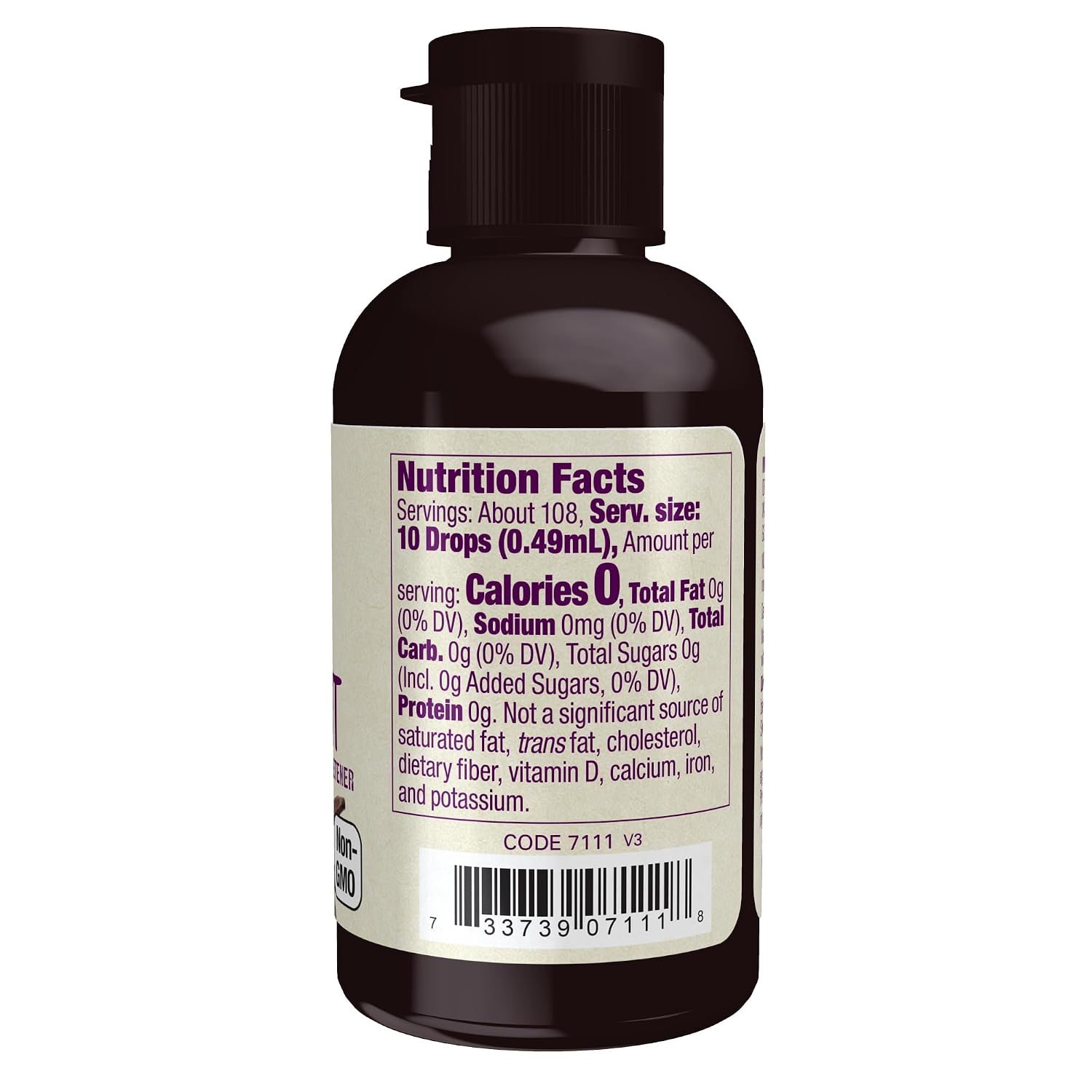
NOW
$13.99
In stock on Amazon
Check price on AmazonTier 3: Bulk Prosumer and Food-Service Formats
Price range: $45–$120+
Artisan beverage formulators, small-batch confectioners, and functional-food professionals operate in a different math environment entirely. At the food-service scale, the question isn’t “which grocery-tier drop is cleanest” — it’s “what mogroside V percentage am I formulating to, and does my supplier provide a Certificate of Analysis?”
At this tier, buyers typically source from specialty ingredient distributors that provide bulk liquid monk fruit in 4 oz, 8 oz, or 1-liter formats with documented MV percentages. The National Institutes of Health’s National Center for Complementary and Integrative Health reference materials on sweetener compounds underscore why this matters in professional formulation: mogroside potency directly affects Maillard reaction behavior (the browning that occurs when sugars are heated), binding behavior in baked goods, and sweetness fade profile in beverages over time.
Practical note for formulators: monk fruit liquid at high MV concentrations does not brown or caramelize the way sugar does. If you’re developing a confection or baked good where browning is part of the intended outcome, you’ll need to account for this with a separate browning agent. Erythritol is commonly used for this purpose in monk-fruit-based baking applications because it provides partial Maillard browning without contributing glycemic load.
Best fit: Beverage formulators, functional food developers, bulk home bakers, and anyone who needs a specification sheet and Certificate of Analysis before committing to a supplier.
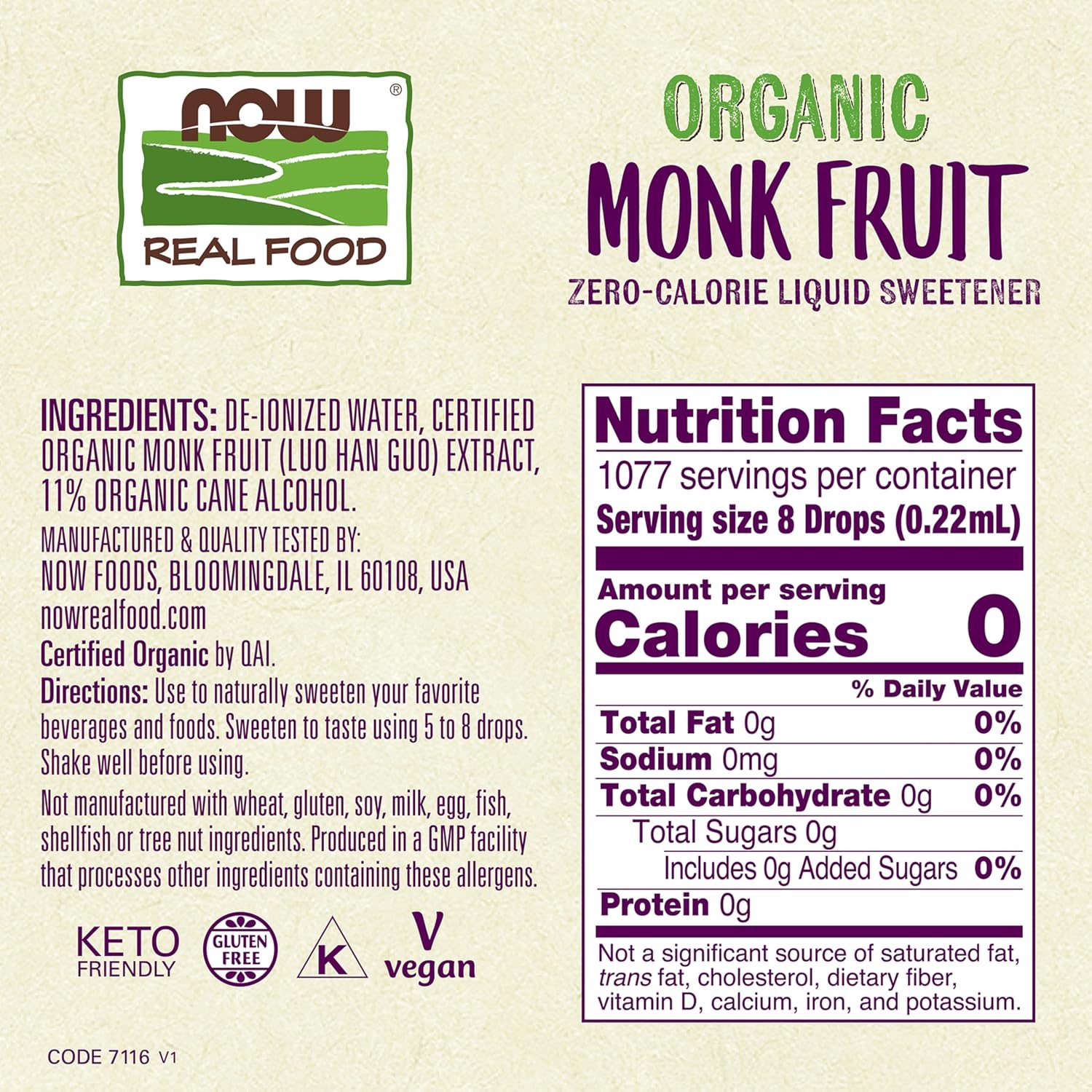
NOW
$33.19
In stock on Amazon
Check price on AmazonHow to Make the Call: The Decision Framework
If you’re sitting with a decision right now — a purchase, a reformulation choice, or a first foray into liquid monk fruit — here’s a direct if/then structure that consolidates everything above.
If you’re a daily casual user spending under $15 and don’t want to calibrate drops: go with a reputable glycerin-based formula at the grocery tier. The convenience trade-off is worth it. Lakanto and NOW Foods are the most consistently reviewed options in this segment with reliable sourcing and broad retail availability.
If you’re managing blood sugar and going through a bottle every two to three weeks: move to the concentrated tier. The cost-per-serving math almost always favors it over a three-month horizon, and the cleaner mogroside profile is what the ADA-supported zero-glycemic case is built on — not glycerin-diluted product. Healthline’s overview of monk fruit sweetener reinforces that the blood-glucose benefit comes from the mogroside fraction specifically, which is why concentration level matters for this use case.
If you’re formulating a product or recipe professionally: don’t use retail drops. Source bulk liquid with a documented MV percentage and a Certificate of Analysis. The cost differential between 20% MV and 50% MV bulk formats is significant, but so is the behavioral difference in your finished product — particularly around sweetness fade in beverages and browning absence in baked applications. Know which concentration you need before you order.
The one universal rule: if the label doesn’t tell you the mogroside V concentration or list monk fruit extract in the first two ingredients, assume you’re buying a diluted formula — and price it accordingly. A $12 bottle that behaves like a $12 bottle is fine. A $12 bottle priced and marketed like a $28 concentrated product is not.
The monk fruit liquid drops category has genuinely useful products at every tier. The transparency gap is the actual problem — and now you have the framework to close it yourself before you add anything to your cart.