If you’ve spent any time baking without sugar — whether for keto (a very low-carb diet), diabetes management, or just cutting back on the sweet stuff — you’ve probably encountered the three names that dominate the premium aisle: Lakanto, Swerve, and Wholesome Yum Besti. Each one promises to behave “just like sugar” in your recipes. Each one falls short of that claim in different ways, for different reasons, at different price points. This guide breaks down exactly where each product wins, where it stumbles, and — most importantly — which one belongs in your pantry based on what you’re actually making.
A quick vocabulary note before we dive in: all three products are sugar alcohol or rare-sugar blends — sweeteners that provide little to no usable glucose to your body — and all three are formulated to replace granulated white sugar at or near a 1:1 ratio. That’s the dream. The reality is more nuanced, and that’s what this article is for.
What You’re Actually Buying: Ingredient Architecture
Understanding what’s inside each product is the first decision-frame, because the base ingredient drives nearly every downstream performance variable — browning, texture, cooling sensation, and aftertaste.
Lakanto Classic / Golden is built on a blend of erythritol (a sugar alcohol fermented from corn, carrying roughly 0.24 calories per gram and a glycemic index of zero, as documented in the Examine.com erythritol ingredient overview) and monk fruit extract (a zero-calorie sweetener derived from Siraitia grosvenorii, a melon native to southern China). According to Healthline’s overview of monk fruit sweetener, the extract’s active compounds — mogrosides — are responsible for its intense sweetness without blood sugar impact. The monk fruit component does two things for Lakanto’s formula: it compensates for erythritol’s modest sweetness deficit relative to sucrose, and it softens the characteristic “cooling effect” (the minty-cold mouthfeel erythritol produces in high concentrations). Lakanto Golden uses a less-refined erythritol that retains a slight caramel note — this matters significantly for cookies and caramel sauces.
Swerve Granular / Confectioners is also erythritol-based, but instead of monk fruit, it adds oligosaccharides — short-chain carbohydrates derived from plant fiber sources such as chicory root. These oligosaccharides are technically carbohydrates, but they are non-digestible, meaning they do not raise blood sugar. They also contribute subtle body and bulk that erythritol alone lacks. The Examine.com erythritol ingredient overview notes that erythritol is absorbed in the small intestine before fermentation can occur, making it the most gastrointestinal-tolerant of the common sugar alcohols — Swerve leans into this by keeping its formula erythritol-dominant.
Wholesome Yum Besti uses allulose — a genuinely rare sugar that occurs naturally in small quantities in figs and raisins — as its primary base, blended with monk fruit. Allulose is metabolized differently from sucrose: as reported by Medical News Today in their overview “What to know about allulose,” roughly 70% is absorbed in the small intestine but excreted in urine without being converted to energy. The American Diabetes Association’s nonnutritive sweeteners position statement affirms that allulose does not raise blood glucose or insulin levels in a clinically meaningful way. The practical upshot for bakers: allulose browns and caramelizes much closer to real sugar than erythritol does, and it does not recrystallize when cooled — which is the single most important performance difference for chewy cookies, caramels, and sauces.
The Performance Matrix: Baking Behavior Where It Actually Counts
This is where practitioners need to get precise. “It works great!” is useless; “it works great in chewy cookies but produces a grainy texture in glazes” is actionable.
Browning and Caramelization
Erythritol — the backbone of both Lakanto and Swerve — does not undergo the Maillard reaction at the same temperature or rate as sucrose. Serious Eats’ article on the science of sugar substitutes in baking explains this clearly: erythritol can brown at high temperatures, but color development is slower, patchier, and more prone to producing hard, glass-like surfaces rather than the soft caramelized crust you want on a pound cake or snickerdoodle.
Allulose, by contrast, caramelizes at a lower temperature than sucrose. Medical News Today’s allulose overview notes this thermal property as one of allulose’s key functional advantages in food applications. In practice, this means Besti-based recipes tend to brown faster, and bakers working with it need to reduce oven temperature by approximately 25°F or check for doneness earlier than a traditional recipe indicates. Once you calibrate for this, the browning quality is dramatically closer to sugar. Among experienced keto bakers, Besti consistently earns higher marks specifically in cookies, brownies, and caramel applications where browning quality is decisive.
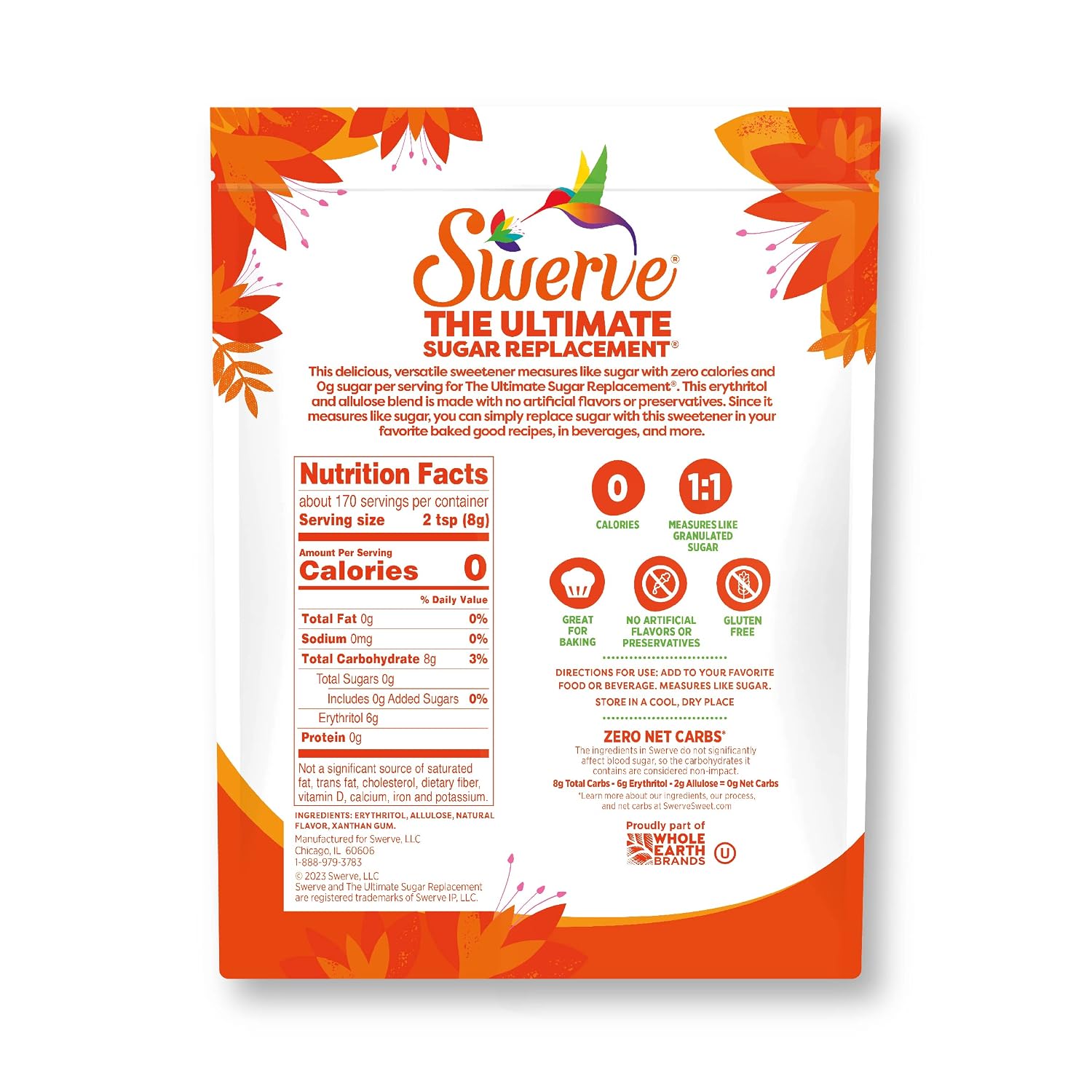
Swerve
$23.64
In stock on Amazon
Check price on AmazonRecrystallization and Texture on Cooling
Erythritol recrystallizes readily when cooled — it returns to its crystalline structure as the temperature drops. For cookies, this produces a crisper, harder texture than most people expect or want. Lakanto Golden handles this slightly better than Lakanto Classic or Swerve Granular because the less-refined erythritol and the flavor complexity of its processing create a marginally more hygroscopic (moisture-attracting) structure. But “slightly better” is still a limitation in chewy brownie or soft sugar cookie applications.
Swerve Confectioners (the powdered version) largely sidesteps the recrystallization problem in glazes and frostings because the fine grind and oligosaccharide inclusion prevent graininess and add structural body. Bakers consistently identify Swerve Confectioners as the benchmark for keto cream cheese frosting and buttercream — it is this product’s clearest competitive advantage.
Besti’s allulose base does not recrystallize at room temperature. This is a documented chemical property of the molecule: as Medical News Today notes in its allulose overview, allulose stays soft and slightly syrupy as it cools, which is precisely why it performs so well in caramels, gummies, and soft-batch cookies where a chewy interior is the goal.
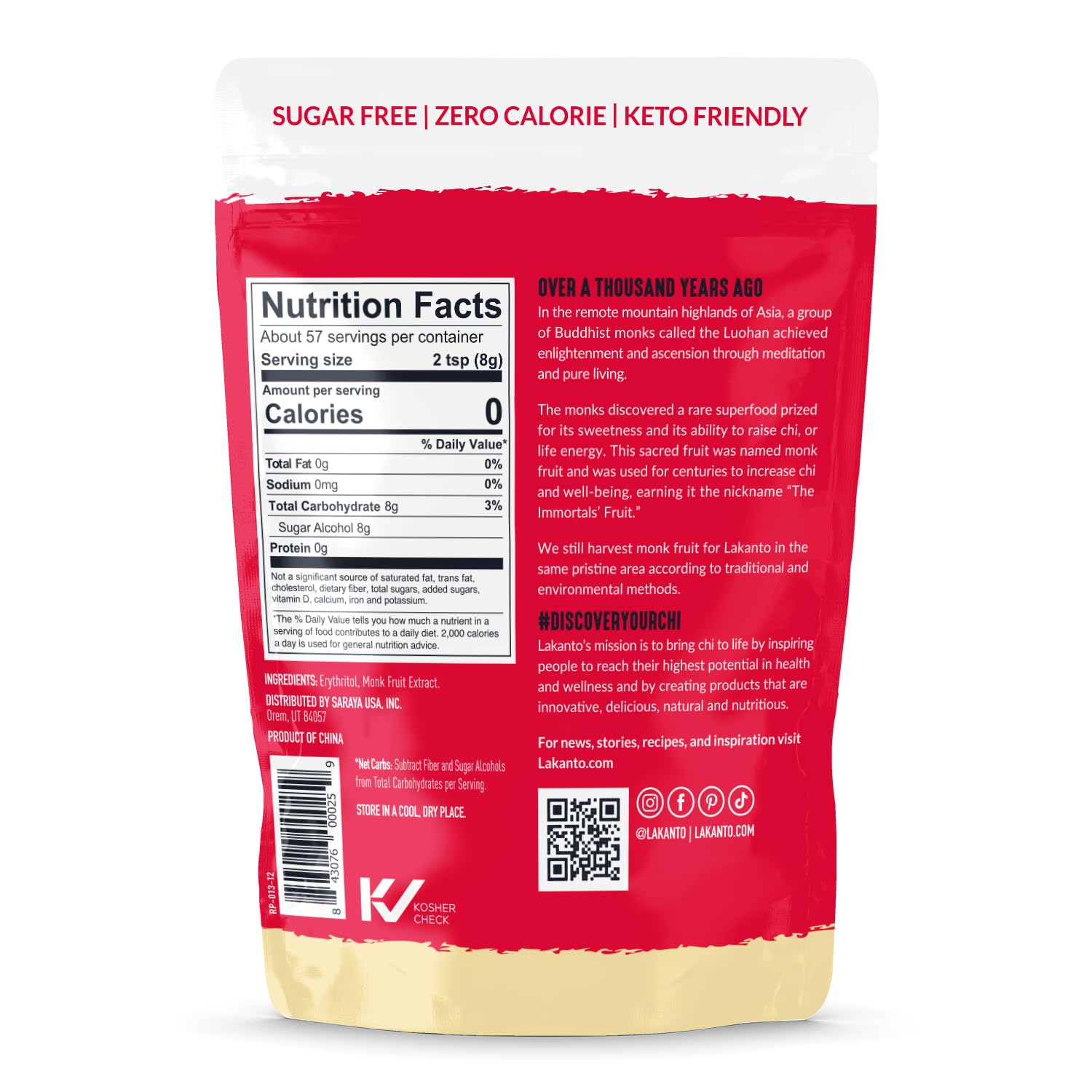
Lakanto
$9.98
In stock on Amazon
Check price on AmazonAftertaste and Cooling Sensation
The cooling effect of erythritol is real and concentration-dependent. In small quantities — a tablespoon stirred into a large batch of muffins — most palates won’t register it. In high-sweetener applications (a keto cheesecake requiring a full cup of sweetener, for example), it becomes noticeable, especially on the back palate after swallowing. As the Examine.com erythritol ingredient overview explains, this sensation arises from erythritol’s negative heat of solution — it absorbs heat as it dissolves on the tongue, producing a perceptible cooling sensation.
Monk fruit extract in both Lakanto and Besti helps mask this effect. The oligosaccharides in Swerve do not directly address the cooling sensation. In practice, Besti tends to receive the fewest aftertaste complaints of the three. Lakanto Golden comes in second — its monk fruit inclusion and the flavor complexity of the golden-grade erythritol genuinely help. Swerve Granular gets the most consistent cooling-effect complaints in high-concentration uses, though bakers who use it regularly report adapting to it over time.
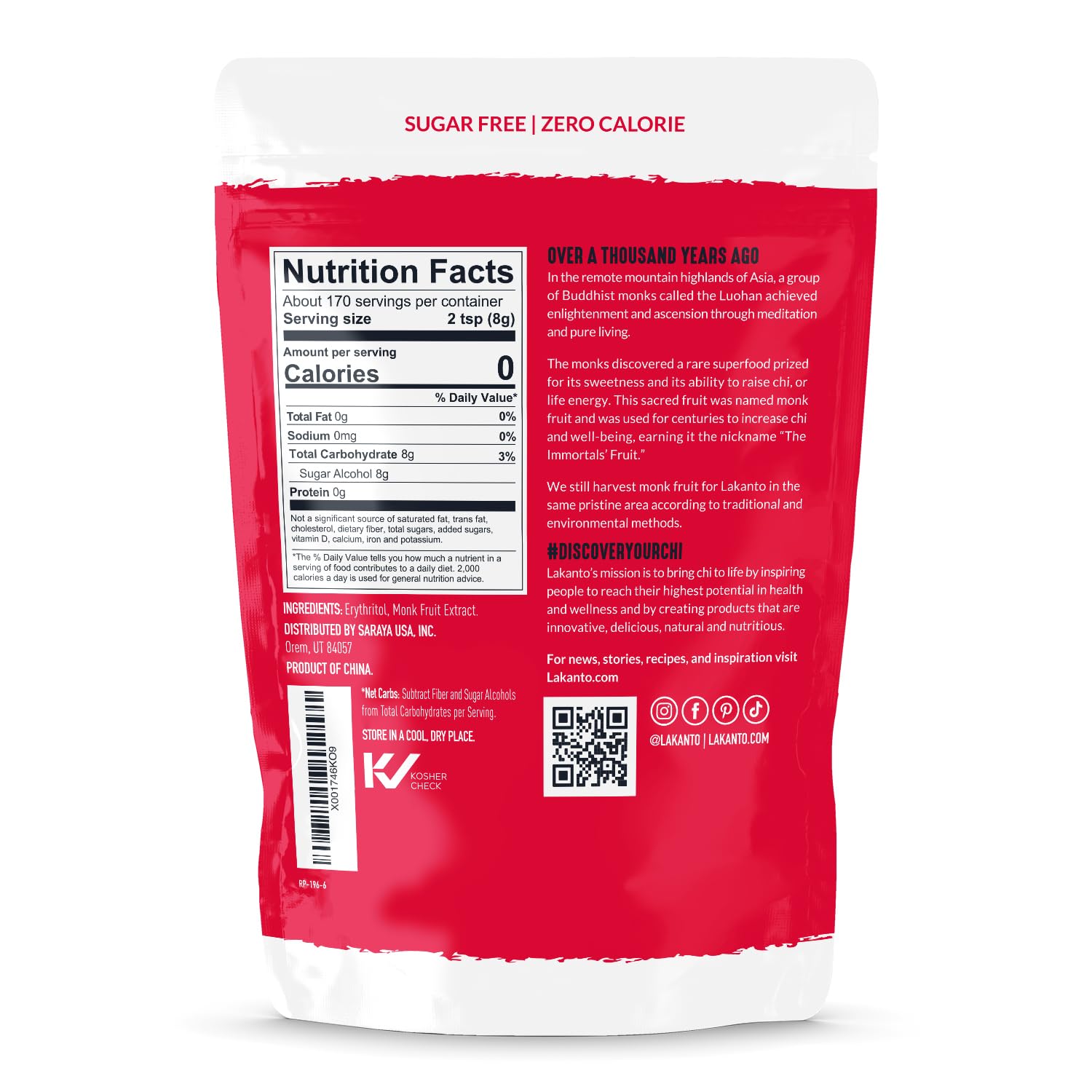
Lakanto
In stock on Amazon
Check price on AmazonBy the Numbers: Price and Value in Mid-2026
| Product | Typical Size | Mid-2026 Price Range | Cost per Cup (approx.) |
|---|---|---|---|
| Lakanto Classic Granular | 16 oz | $10–$13 | ~$2.60–$3.25 |
| Swerve Granular | 12 oz | $8–$11 | ~$2.75–$3.85 |
| Wholesome Yum Besti Granular | 16 oz | $16–$20 | ~$4.00–$5.00 |
Prices reflect observed retail and online marketplace ranges as of mid-2026. Bulk formats (3–5 lb bags) reduce per-cup cost by 30–40% for all three brands and are worth factoring in before committing to a brand based on small-bag pricing alone.
Besti commands a 50–80% premium over Lakanto and roughly double the per-cup cost of Swerve at small-bag sizes. That premium is almost entirely attributable to allulose — it is a more expensive ingredient to produce than erythritol, and supply chain constraints on allulose have kept prices elevated through early 2026. The performance gains are real, but so is the cost difference, and that trade-off deserves honest acknowledgment.
Where Each Product Has a Clear Competitive Edge
Lakanto Golden: The Mid-Range All-Purpose Workhorse
Lakanto Golden is the best mid-range all-purpose option when your baking mix skews toward warm-spiced or fall-flavored applications — brown butter cookies, spice cakes, granola, anything where a hint of caramel depth improves the finished product. The monk fruit inclusion delivers sweetness amplification without Besti-level cost, and the golden-grade erythritol’s subtle molasses-adjacent flavor adds complexity that Lakanto Classic and Swerve Granular simply don’t have. Bakers who work across multiple recipe types regularly keep Lakanto Golden as their daily-driver granular sweetener.
Lakanto
$9.98
In stock on Amazon
Check price on AmazonSwerve Confectioners: The Frosting and Glaze Specialist
For frostings, glazes, royal icing, and any application where a powdered-sugar texture is non-negotiable, nothing in this comparison beats Swerve Confectioners. The fine grind combined with the oligosaccharide blend produces smooth, non-grainy keto frosting with structural stability. It also performs reliably in humid environments, which matters for anyone decorating layer cakes or producing candied items in warm kitchens. If you bake Lakanto or Besti for your main recipes, Swerve Confectioners is still worth having on hand as a finishing sweetener — it occupies a functional niche the other two don’t fully cover.
Lakanto
In stock on Amazon
Check price on AmazonWholesome Yum Besti: The Texture-First Premium Choice
For chewy cookies, caramels, soft-batch brownies, and any recipe where browning quality or recrystallization is the deciding factor, Besti’s allulose base is doing work that erythritol cannot replicate. If a recipe lives or dies on texture — the pull of a gooey center, the snap-free chew of a salted caramel, the glossy top of a fudgy brownie — the allulose foundation is a genuine performance differentiator, not a marketing position. For artisan bakers or small-batch confectioners producing keto-friendly products commercially, the performance dividend likely justifies the cost at scale. For a home baker making one batch of cookies on a weekend, it is a personal call based on how much the texture difference matters to you.
Swerve
$23.64
In stock on Amazon
Check price on AmazonThe Decision Rule
Here’s the if/then frame for your next purchase:
- If your priority is texture in soft or chewy baked goods and caramels, and budget is secondary → Besti
- If your priority is frosting and glaze quality at a moderate price → Swerve Confectioners
- If your priority is an all-purpose granular sweetener at a mid-range price with good browning and monk fruit balance → Lakanto Golden
- If you’re buying in bulk for regular, high-volume baking, all three brands offer larger formats that meaningfully close the per-unit cost gap — factor that in before making a brand commitment based on small-bag pricing alone
One honest caveat: none of these products is a perfect 1:1 sugar replacement in every application. The gap between erythritol-based blends and sucrose in browning behavior is well-documented in food science literature, and even allulose’s favorable caramelization profile requires recipe adjustment — specifically, reducing oven temperature or shortening bake time to prevent over-browning. The Serious Eats article on the science of sugar substitutes in baking is a useful reference for understanding why this gap exists and how to manage it through technique: adjusting bake time, temperature, and liquid ratios.
The encouraging reality is that the keto baking space has matured enough that community-tested recipes are widely available, and all three of these brands publish recipe libraries calibrated to their specific products’ behavior. Using those as your starting templates — rather than doing a straight conversion from a traditional sugar recipe — will get you to a better result faster than any comparison guide can on its own.